Sam Werner · 16 September 2026
Cross-Border Optics Work in Poland Reveals Fresh Applications for Low-Light Detection in Crop Monitoring
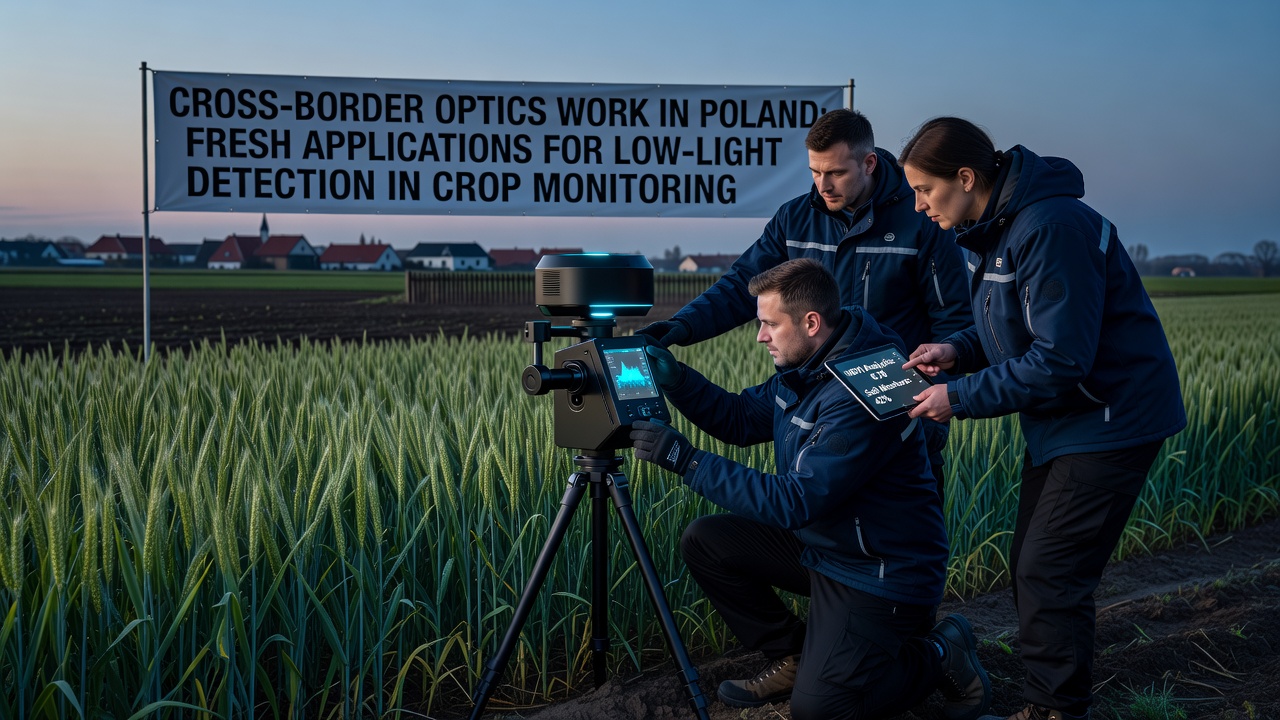
Polish research institutions have expanded their optics programs through partnerships with teams from Germany and the Netherlands, and these efforts now focus on low-light detection systems that support crop monitoring even after sunset or during overcast periods. Teams integrate photonics components with standard agricultural sensors, which allows continuous data collection without reliance on daylight alone. Data shows that such systems capture subtle changes in plant reflectance at wavelengths between 700 and 1100 nanometers, and these measurements help identify stress factors like water deficit or nutrient imbalance before visible symptoms appear.
Technical Foundations of the Work
Engineers at several Polish universities developed compact detectors that operate effectively at illumination levels below 10 lux, and they combined these with algorithms that filter out background noise from moonlight or street lighting. The approach builds on earlier photonic chip designs refined through cross-border exchanges, while researchers adapted calibration protocols originally tested in Dutch greenhouse environments. According to figures released by the European Commission Directorate-General for Agriculture, similar sensor networks have already reduced irrigation volumes by 18 percent on monitored plots across multiple member states.
Deployment Across Varied Field Conditions
Trials conducted on Polish cereal and vegetable farms during the 2025 growing season demonstrated that low-light detectors maintained accuracy within 4 percent of daytime readings, and operators collected data every 15 minutes without additional power infrastructure. One study revealed that the sensors distinguished between healthy and nitrogen-deficient maize rows under full cloud cover, whereas conventional RGB cameras failed to register the difference. Farmers in the Lublin region integrated the output with existing drone mapping platforms, which produced daily health indices that guided targeted fertilizer applications.
September 2026 Milestones and Expanded Testing
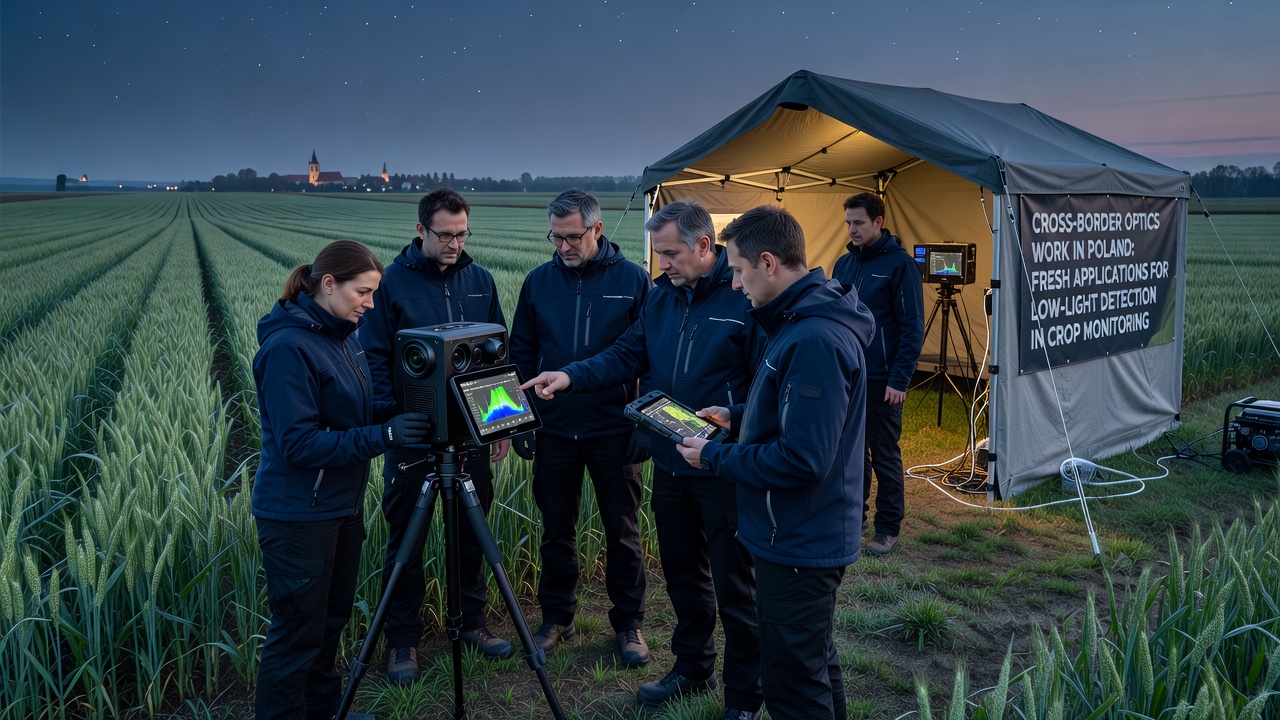
Project leads scheduled a joint field demonstration for September 2026 that will bring together participants from Poland, Belgium, and Canada to test upgraded detector arrays on soybean and rapeseed plots. The event follows preliminary results presented at an optics conference in Warsaw earlier this year, and organizers expect to release updated performance metrics covering at least 250 hectares of commercial farmland. Canadian researchers contributed cold-climate calibration data that extended the operational range of the sensors to temperatures as low as minus 5 degrees Celsius, while Belgian partners supplied software tools for real-time anomaly detection.
Integration with Broader Agricultural Data Systems
Low-light detection outputs feed directly into national crop insurance databases in Poland, and analysts have begun correlating these readings with satellite indices produced by the Copernicus program. Research indicates that combining ground-level optical data with space-based observations improves yield forecasts by up to 12 percent compared with satellite data alone. A report from the United States Department of Agriculture Agricultural Research Service notes that comparable multi-sensor approaches are under evaluation in Midwest soybean belts, which suggests potential for future transatlantic data-sharing protocols.
Technicians have also fitted handheld versions of the detectors onto existing tractor booms, and these units transmit readings through standard ISOBUS connections already present on most modern farm equipment. The setup requires minimal additional training, because operators view the processed maps on the same cab displays they use for guidance systems. Field tests completed in 2025 confirmed that the combined hardware maintained signal integrity across 12-hour continuous runs without recalibration.
Future Scaling and Regulatory Context
Polish regulatory bodies have begun drafting guidelines for optical sensor use in precision agriculture, and these documents reference performance thresholds established during the cross-border trials. The European Food Safety Authority has requested additional validation datasets before endorsing wider adoption in food-crop certification schemes. Meanwhile, teams continue to refine wavelength selection algorithms that differentiate between crop species under identical low-light conditions, and early results point toward species-specific calibration libraries that could be shared across EU member states.
Conclusion
Cross-border optics initiatives centered in Poland have produced practical low-light detection tools that extend crop monitoring into previously inaccessible time windows. Continued collaboration with international partners through the planned September 2026 demonstrations will likely generate standardized protocols and expanded datasets. These developments rest on measurable performance gains documented across multiple growing seasons and geographic zones.