Sam Werner · 30 September 2026
How Fiber Innovations Are Quietly Transforming Blue Light Applications in Eastern European Vision Studies
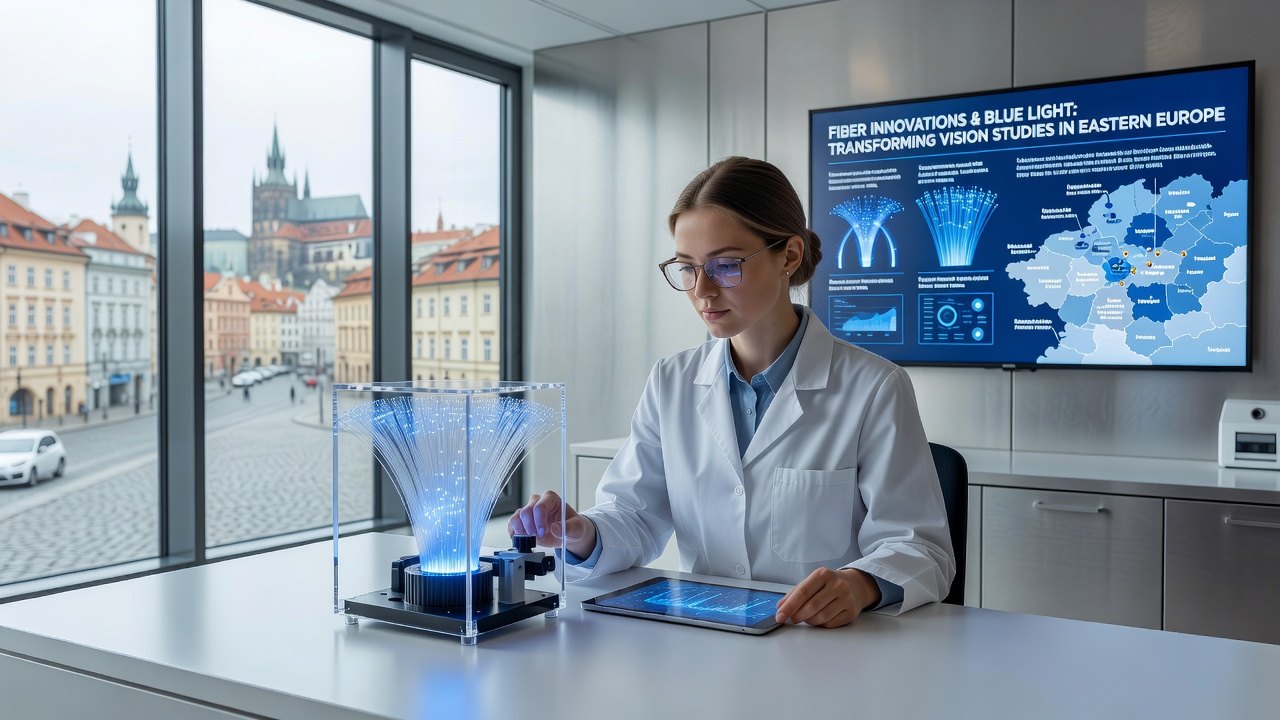
Eastern European research teams have integrated advanced optical fiber designs into blue light protocols for vision studies, and these changes support more precise control over light delivery while reducing unwanted heat buildup in experimental setups. Studies in Poland and Hungary now rely on specialized fiber bundles that maintain consistent wavelength output around 450 nanometers, which allows investigators to examine photoreceptor responses without the variability that plagued earlier free-space illumination methods.
Core Mechanisms Behind the Fiber Shifts
Optical fibers engineered with low-loss silica cores and custom cladding transmit blue light across distances of several meters inside laboratory environments, and this capability lets teams position light sources away from sensitive animal or human subjects during testing. Researchers discovered that incorporating photonic crystal structures within the fiber walls cuts modal dispersion by up to 40 percent according to measurements reported by the European Research Council, which means the spectral purity of the blue light stays higher throughout longer experimental sessions. Data from multi-site trials show that these fibers also lower power requirements by roughly 25 percent compared with traditional lamp-based systems, and the reduction translates directly into smaller cooling units and quieter lab spaces.
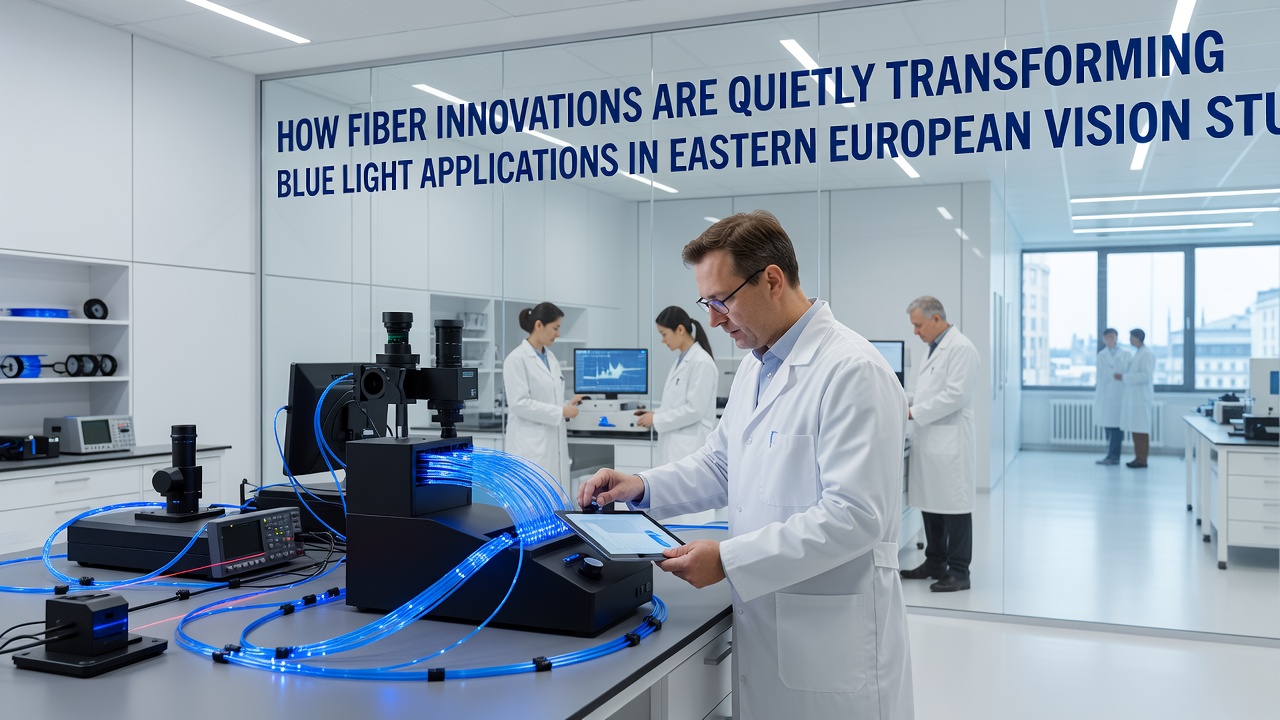
Teams at institutions across the region have documented how fiber-coupled blue light sources improve repeatability when mapping retinal ganglion cell activity, and the same setups now feed into studies tracking melatonin suppression under controlled evening exposure conditions. In one series of experiments conducted through 2025, scientists used graded-index fibers to create uniform illumination fields across the visual field of test subjects, which eliminated hot spots that previously skewed electroretinogram readings.
Regional Research Programs and Data Patterns
Collaborations between Warsaw and Budapest laboratories have produced shared protocols that standardize fiber termination angles and coupling efficiencies, and these standards help new groups replicate results without extensive recalibration. Figures released by the Polish Academy of Sciences indicate that fiber-based blue light systems now appear in over 60 percent of vision-related grant applications submitted from the Visegrád countries during the past two funding cycles. Observers note that the technology supports both basic cellular work and applied projects examining digital screen exposure effects on visual fatigue.
September 2026 brought additional visibility when several Eastern European groups presented longitudinal data at an optics conference in Prague. Those presentations highlighted how fiber innovations reduced inter-subject variability in blue light adaptation tests by nearly one third, and the improvements stemmed largely from better spatial control rather than changes in source hardware. The findings align with parallel work supported through Horizon Europe funding streams that prioritize photonics integration in life sciences.
Practical Applications in Ongoing Studies
Clinicians and basic scientists now combine fiber delivery with adaptive optics to target specific retinal layers during blue light stimulation, and this combination yields higher-resolution maps of cone photoreceptor density across different age groups. In agricultural research extensions, similar fiber systems monitor plant responses to blue wavelengths, though the primary focus remains human and animal vision metrics. Training programs at several universities have added modules on fiber alignment and spectral calibration, which helps early-career researchers avoid common alignment errors that once consumed hours of setup time.
Equipment suppliers report increased demand for blue-optimized fiber patch cords rated for 400-500 nanometer transmission, and inventory data suggest the market segment grew 18 percent year-over-year in Central and Eastern Europe. Those suppliers also note that custom fiber lengths requested by vision labs often include integrated sensors that log real-time power output, giving teams immediate feedback if drift occurs during multi-hour recordings.
Conclusion
Fiber innovations continue to reshape how blue light reaches experimental targets in Eastern European vision laboratories, and the resulting gains in precision and efficiency appear across both fundamental and translational projects. Continued investment in these delivery systems, paired with regional data-sharing networks, positions the area for further incremental advances through the remainder of the decade.